




















There’s a moment most sourdough beginners experience — and if you’ve been baking for even a short while, you probably know exactly what I mean.
You mix your dough.
You follow the steps.
You wait the amount of time the recipe told you to…
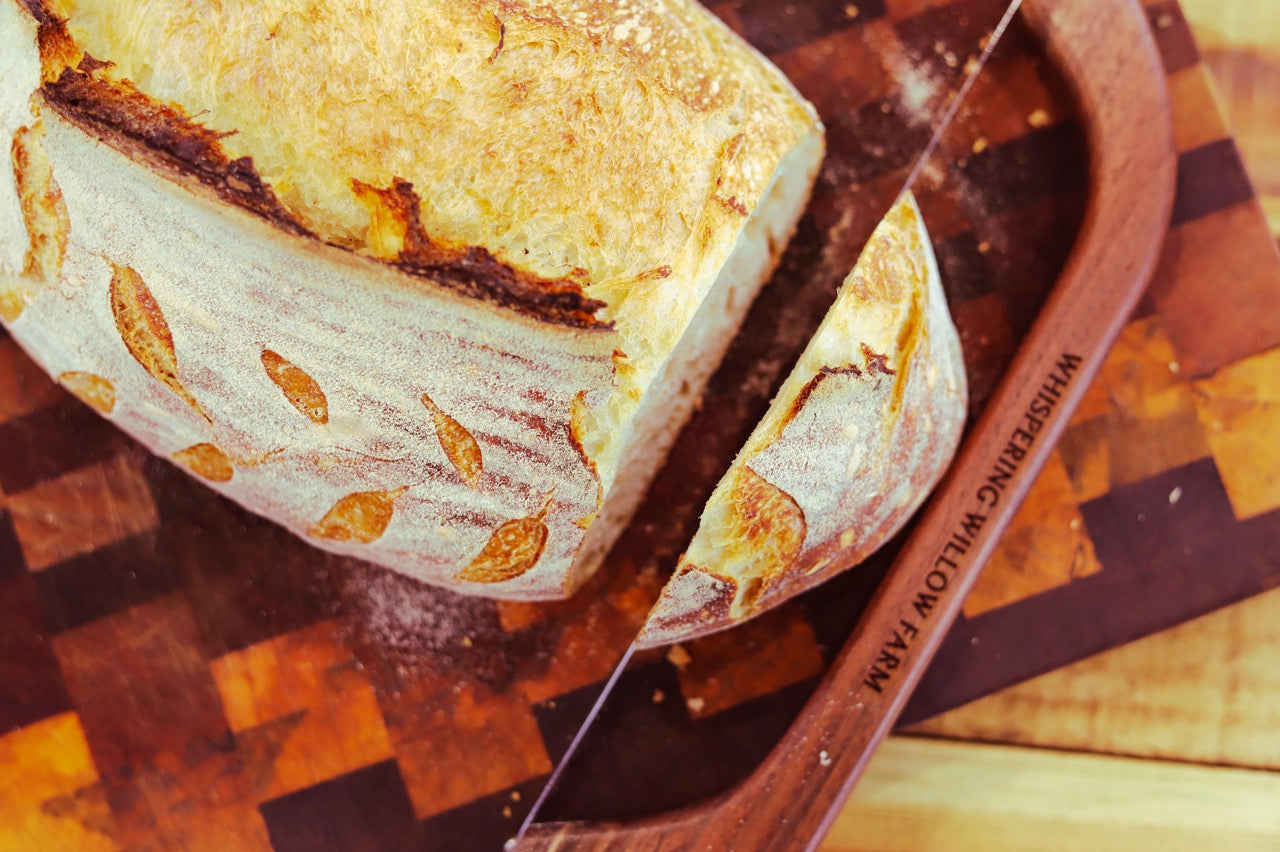
And when you slice into that loaf, it’s dense.
Heavy.
Tight inside.
Not light.
Not airy.
Not what you hoped for.
And usually, the first thought is:
“What did I do wrong?”
Most beginners assume it’s the flour.
Or the starter.
Or the shaping.
But after years of baking sourdough and teaching thousands of beginners, I can tell you with confidence:
The #1 mistake new sourdough bakers make is rushing fermentation.
Because fermentation isn’t controlled by the clock. It’s controlled by the dough - that's a trick it takes a few bakes to really dial in.
The Truth About Time and Sourdough
One of the biggest misunderstandings in sourdough baking is believing fermentation follows a fixed schedule.
Recipes often say things like:
- Bulk ferment for 4 hours
- Proof overnight
- Bake in the morning
And while those timelines can be helpful guidelines, they aren’t guarantees.
Because fermentation depends on:
- Temperature
- Starter strength
- Dough hydration
- Flour type
- Even the season you’re baking in
That same dough that takes 6-8 hours to ferment in summer might take 10… or even 12 hours in cooler weather.
And if you move forward too soon?
That’s when dense loaves happen.
What Happens When Dough Doesn’t Ferment Long Enough
When fermentation is rushed, the dough doesn’t have time to fully develop.
That means:
- The gluten structure stays weak
- The dough doesn’t trap gas
- The loaf stays tight and heavy
- Oven spring is minimal
Instead of lifting upward, the loaf stays flat.
Instead of soft crumb, you get density.
And the frustrating part?
It often looks like you followed every step correctly.
But fermentation wasn’t finished.
Signs Your Dough Needs More Time
Instead of watching the clock, learn to watch the dough.
That’s when sourdough really starts to make sense.
During bulk fermentation, look for:
Visible bubbles forming throughout the dough
Not just on top — but along the sides of your container too.
A noticeable rise in volume
Usually around 30–50%, depending on the dough.
A softer, airier feel
The dough should feel alive — not stiff or heavy.
Gentle jiggle when moved
Not liquid… but relaxed.
These signs matter far more than the number of hours on a timer.
How Temperature Changes Everything
Temperature is one of the biggest factors in fermentation speed.
Warm kitchens ferment faster.
Cool kitchens ferment slower.
And this alone explains why recipes don’t always behave the same way.
If your kitchen is:
70–75°F — fermentation moves steadily
Below 68°F — fermentation slows significantly
Above 75°F — fermentation speeds up
That’s why understanding your kitchen environment matters just as much as understanding your recipe.
Patience Is the Ingredient Most Beginners Skip
If I could go back and teach my beginner self one lesson, it would be this:
Give the dough time.
If you’ve already baked a dense loaf, don’t throw it out.
And don’t assume you failed.
Most dense loaves are simply under-fermented, not ruined.
Next time:
- Extend bulk fermentation
- Watch the dough instead of the clock
- Make notes about temperature
- Give it just a little longer than you think
Often, that small shift makes all the difference.
If You Feel Stuck, You’re Not Alone
If you’ve baked dense loaves…
If your bread hasn’t turned out the way you hoped…
If you’ve wondered whether sourdough is even worth it…
You’re not alone.
Every baker starts there.
And most problems — especially dense loaves — can be fixed with simple adjustments once you understand what’s happening.
Want Help Troubleshooting Your Loaves?
If you’re feeling stuck or frustrated, this is exactly why I created my Sourdough Troubleshooting Handbook.
Inside, I walk through:
- The most common sourdough problems
- What causes them
- How to fix them step-by-step
- What to watch for in your dough
Because sourdough shouldn’t feel confusing.
It should feel doable.
One loaf at a time.


