











When Sourdough Sounded Like a Foreign Language
Back in 2020 when I started my sourdough journey, I had some sweet friends help me along the way. The only problem? These sweet friends understood the scientific side of sourdough.
They were talking about hydration levels, bulk fermentation, amylase activity, autolyse… and y’all, it may as well have been a foreign language. I remember standing there thinking, I am not going to be able to hang with the scientific folk.
I didn’t care about percentages and enzyme breakdown. I just wanted to bake bread for my family.
So I decided if I couldn’t understand the science, I would learn the art. I would learn the feel. The rhythm. The way the dough responded to my hands.
But even with that mindset, I made some classic beginner mistakes.
When I started, sourdough resources weren’t nearly as available as they are today. So when something went wrong, instead of tweaking one small thing… I changed everything.
Hydration? Changed it.
Flour? Swapped it.
Bulk time? Shorter. Then longer.
Scoring pattern? New one.
Baking vessel? Different one.
Let’s just say none of those things served me very well.
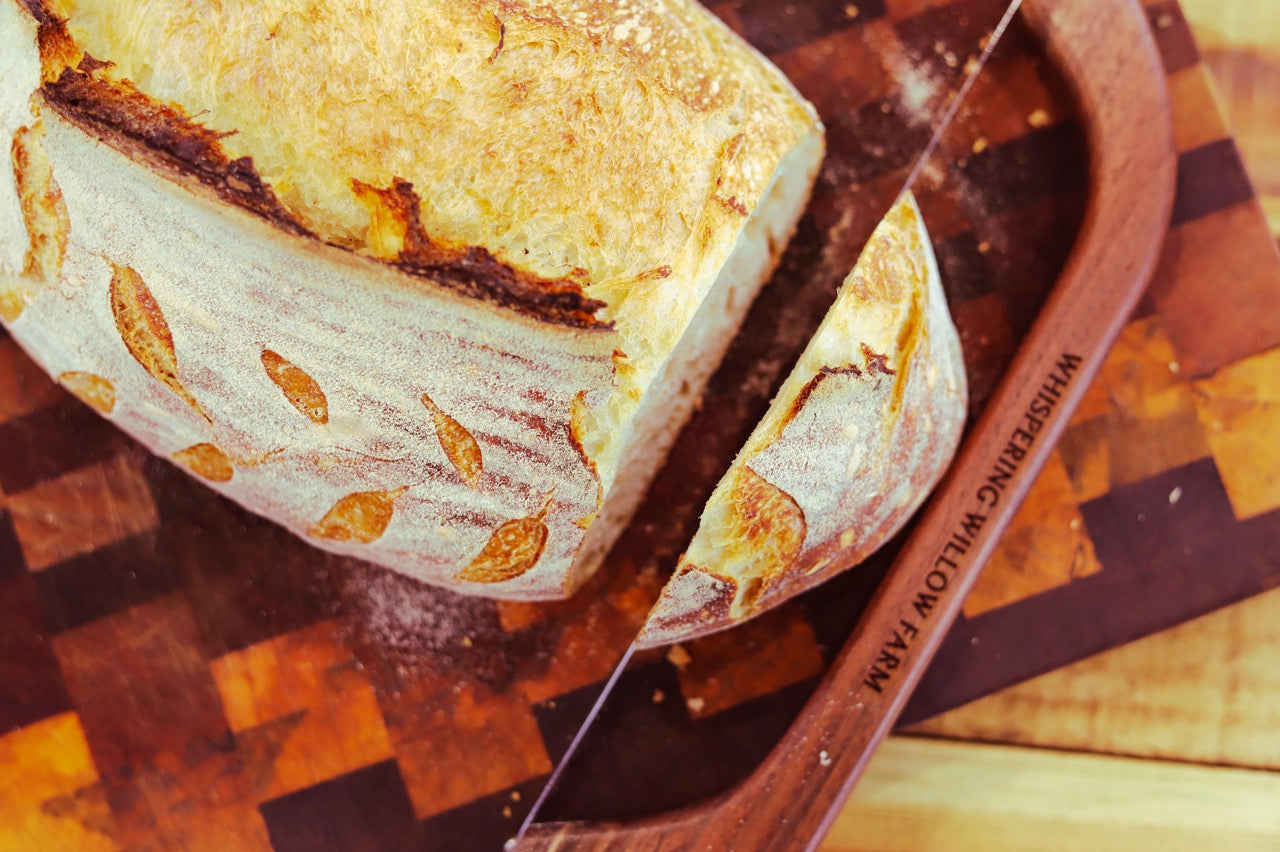
And to make matters worse? My very first loaf was gorgeous.
A true artisan boule. Dominant ear. Beautiful rise. Crumb to die for.
I immediately decided I was pro level.
Then I baked the next loaf. And the next.
And I got humbled real quick.
Turns out beginner’s luck might just be a thing.

Why Beginners Struggle (And It’s Not Because You’re Bad at Baking)
The biggest reason beginners struggle?
Too many variables at once.
When you change everything at the same time, it becomes almost impossible to isolate what caused the flop. Instead of adjusting hydration and keeping everything else the same, I adjusted hydration, flour, fermentation time, shaping, and baking method all at once.
So when the loaf failed, I had no idea where to start troubleshooting.
There were too many moving parts.
And on top of that? I didn’t start with an easy loaf.
I went straight for the artisan boule — one of the more technical loaves to master.
You don’t buy a bike and immediately enter a race. You start with training wheels. Maybe a cute little basket and horn. You learn balance first. You build confidence. Then eventually you take the wheels off.
Sourdough is no different.
If you jump straight into the hardest loaf, you’re setting yourself up for overwhelm.

Why Focaccia Is the Best Place to Begin
That’s why I always, always, always tell new bakers:
Start with focaccia.
It is structurally forgiving. There’s no intricate shaping. No tension-building technique to master. No dramatic oven spring to obsess over.
And here’s the beautiful thing — focaccia is technically an Italian flatbread. So if it doesn’t rise like a tall artisan loaf? That’s fine. It still bakes up golden, airy, and absolutely delicious.
How High Hydration Actually Helps You
Focaccia is a higher hydration dough, which means there’s more water relative to flour. And while that sounds intimidating, it’s actually helpful for beginners.
Higher hydration doughs are softer and more flexible. They create an open, airy crumb without needing perfect shaping technique. The moisture gives you a little wiggle room. It’s forgiving.
You’re not fighting a stiff dough. You’re learning to work with a sticky one.
And that stickiness? That’s where the goodness is.
What Focaccia Quietly Teaches You
Focaccia taught me:
- What a sticky dough is supposed to feel like
- What “high hydration” actually means in my hands
- How fermentation changes texture
- How to read bubbles
- When dough feels strong versus slack
It also taught me flexibility.
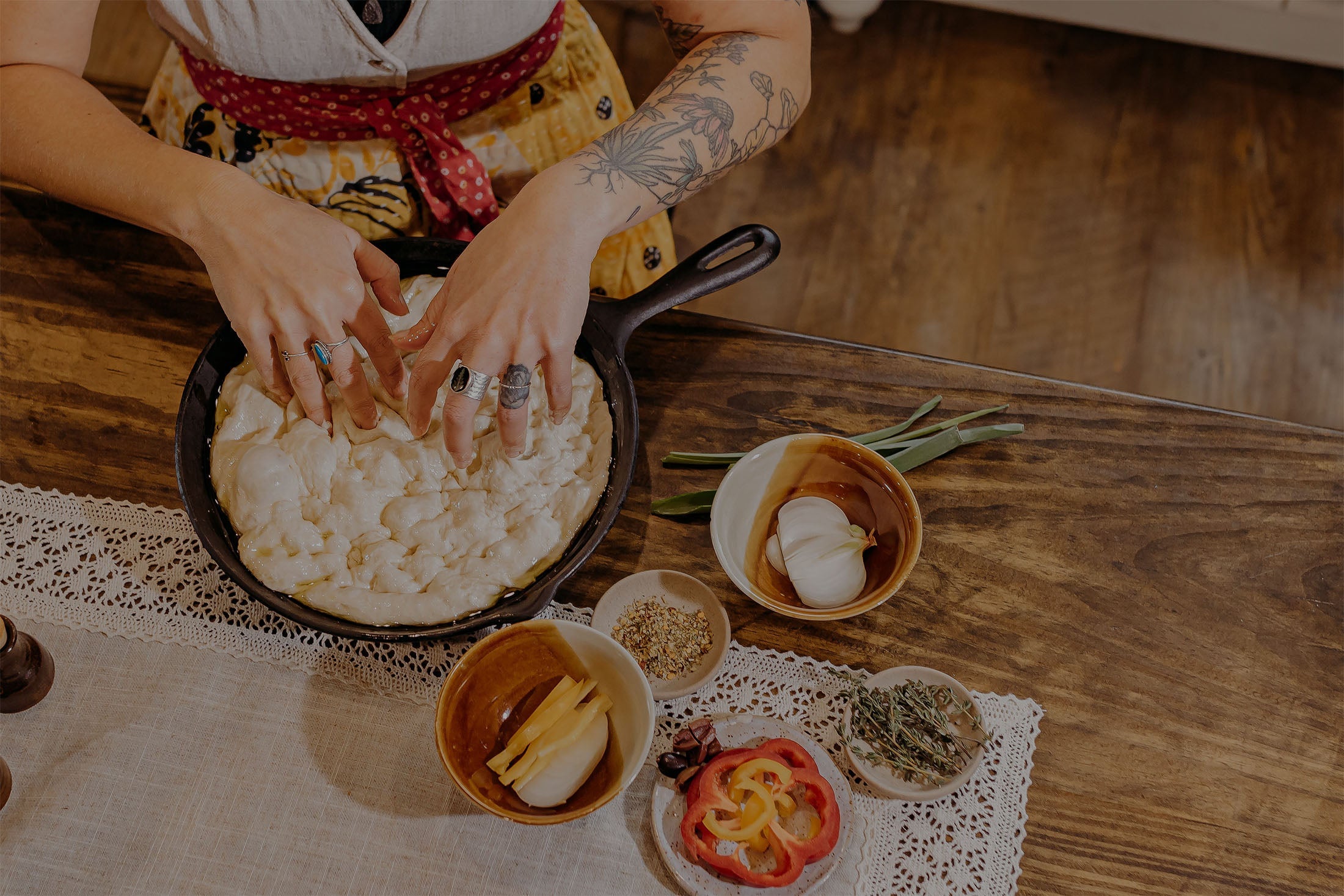
You can bake it in a cast iron skillet for a deep-dish style bread perfect for soups and pasta.
You can spread it thin on a baking sheet for pizza.
You can tuck it into a loaf pan for the easiest sandwich bread you’ve ever had.
If you’re not catching on — this loaf is flexible.
There’s almost no way to mess it up. If bulk fermentation didn’t go as planned? Bake it in a different vessel. Problem solved.
That kind of success builds confidence fast.
The Three Bake Rule
Here’s something I tell every beginner:
Give any recipe three bakes before you judge yourself.
Bake one is survival mode.
Bake two is observation mode.
Bake three is understanding.
Between bake one and bake three, something shifts.
The first time, you’re just trying to follow directions without panicking. The second time, you start noticing. “Oh, this is what the dough looked like before it doubled.” “This is how long it actually takes in my kitchen.” By the third bake, your hands recognize what to expect.
What you’re actually learning isn’t just a recipe.
You’re learning:
- How temperature affects timing
- What proper fermentation looks like
- How your starter behaves
- How dough feels when it’s ready
Repetition beats information every single time.
You can watch a hundred videos. You can read every blog post. But nothing replaces three consistent bakes with the same recipe.
Information feels productive.
Repetition creates skill.
What Not to Tweak Too Early
If you’re just starting, here’s my loving warning:
Do not tweak everything.
Leave hydration alone.
Leave flour alone.
Leave bulk time alone.
Leave starter ratios alone.
At least for the first few bakes.
When you change multiple elements at once, troubleshooting becomes impossible. If the loaf turns out dense, was it hydration? Was it under-fermented? Was it your flour swap? Was it your starter feed?
You’ll never know.
Instead, pick one solid, beginner-friendly recipe and commit to it for at least three bakes. Keep the variables the same so you can actually learn from the process.

Just Start (But Start Wisely)
I cannot encourage you enough to just start baking.
But choose the right recipe — one that won’t overwhelm you from the beginning.
Build your confidence loaf by loaf. One focaccia. One sandwich loaf. One simple rhythm at a time.
Once you understand the craft a bit more? Then get adventurous. Try the artisan boules. Experiment with batards. Tackle pastries. Play with lamination.
You absolutely can be an excellent baker.
You can provide bread for your family every single week.
But if you overwhelm yourself before you even begin, what’s the point
From Overwhelmed to Everyday Rhythms
I created my sourdough cookbook from that same place of overwhelm.
I wanted baking to feel joyful. Repeatable. Rhythmic.
So I filled it with beginner-friendly, foolproof recipes for everyday baking — morning comforts, hearthside suppers, simple desserts, and practical ways to use up discard.
It’s designed to help you build confidence the right way.
One recipe.
Three bakes.
Repeatable rhythm.
If you’ve been on the fence about starting your sourdough journey, here’s your nudge to say yes.
Start simple. Stay consistent. Let your hands learn.
And if you’re ready for a collection of approachable, real-life recipes to guide you along the way, you can check out my cookbook here.
And, that super simple focaccia I've been raving about? Keep scrolling, I left the recipe for you below


Talk Soon,
Jill


